
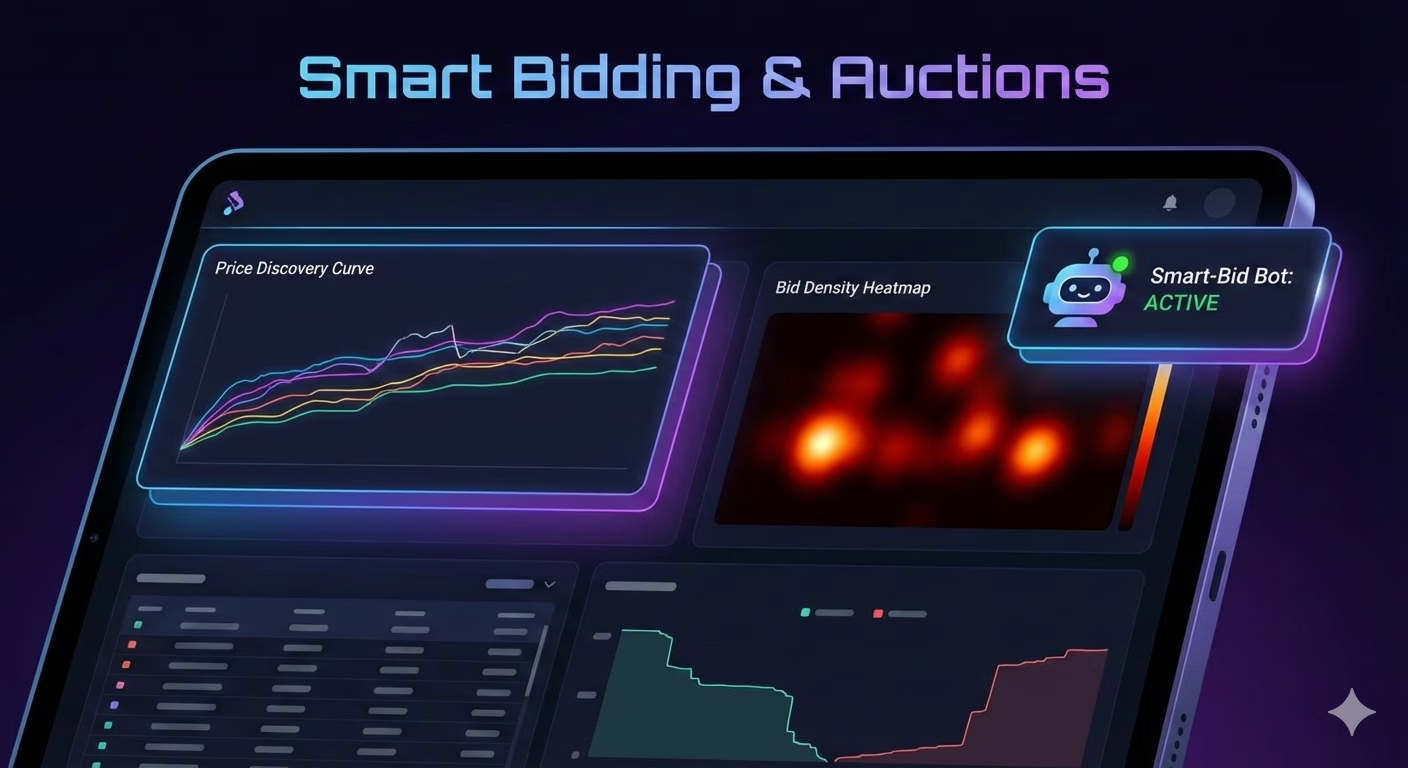
Most platforms mistakenly treat carbon auctions like eBay, yet carbon is a heterogeneous asset with deeply nuanced value drivers. When a buyer overpays, or a developer undersells, it isn’t merely a poor trade-it is a fundamental failure of Price Discovery that erodes market trust.
Manual bidding processes frequently trigger the “Winner’s Curse,” where buyers overpay due to information asymmetry. This volatility creates a “Liquidity Trap,” scaring away the institutional capital necessary to scale global climate solutions effectively.
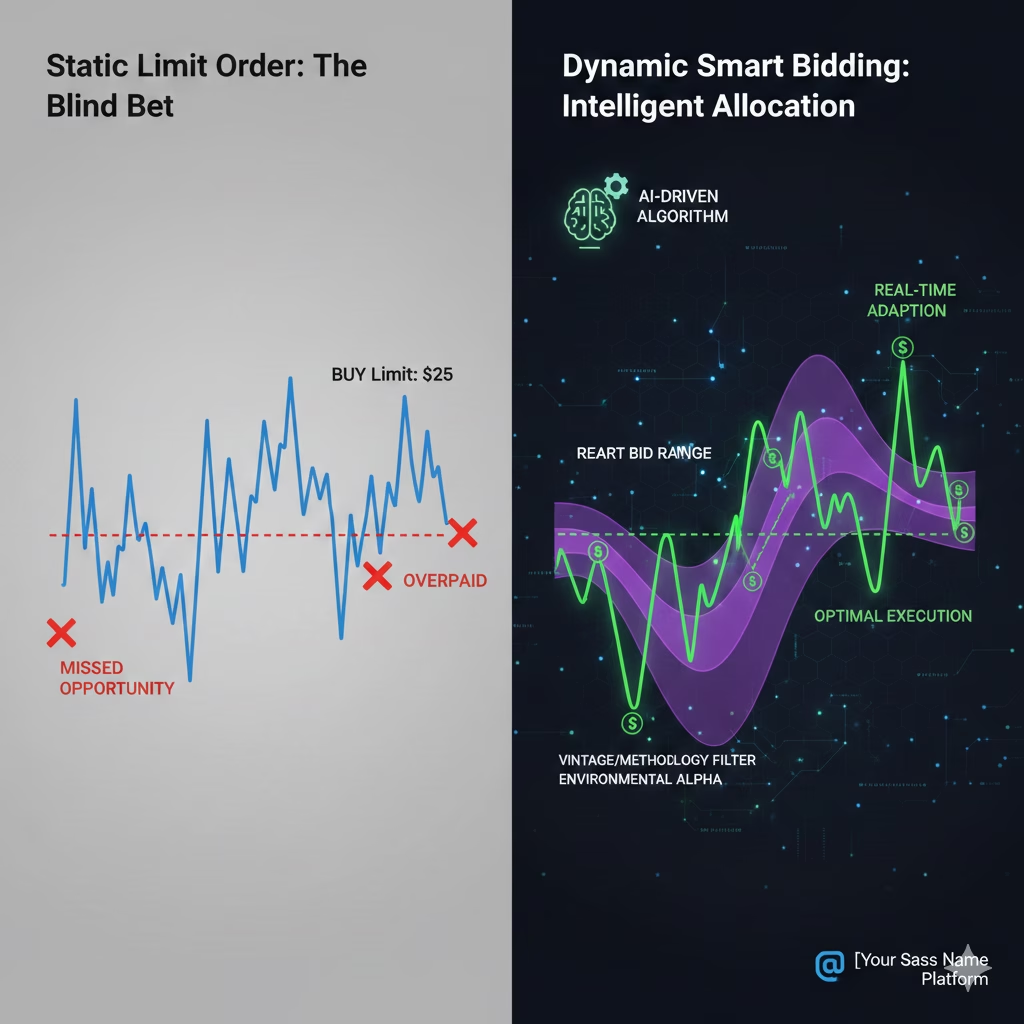
In a legacy setup, buyers use “limit orders”- a blunt instrument that ignores the context of the credit. Our SaaS introduces Smart Bidding: proprietary algorithms that dynamically adjust your bid based on a multi-factor analysis of vintage, co-benefit methodology, and real-time demand. It moves the market from “set and forget” to “analyze and optimize.”
Traditional auctions are “Blind,” offering no feedback until the hammer falls. Smart Bidding introduces Price Signaling. It enables buyers to participate in multiple, concurrent auctions, autonomously shifting budgets to where the “Environmental Alpha”– the highest integrity credit at the most efficient price point- is most accessible. This isn’t just bidding; it’s programmatic portfolio construction.
The Problem: The Greenwashing Gauntlet
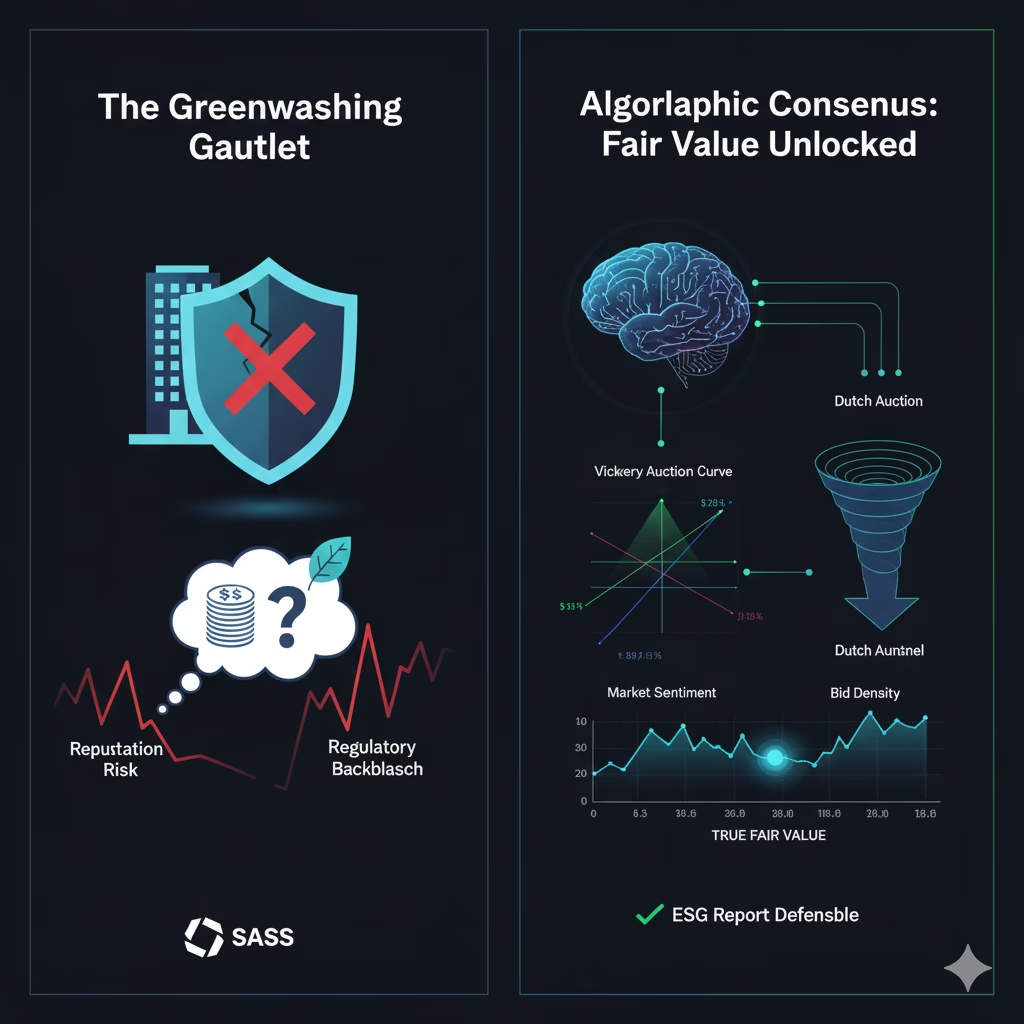
In today’s hyper-scrutinized ESG landscape, large corporations face an existential threat: greenwashing accusations. It’s no longer enough to simply “buy carbon credits” to meet net-zero targets. The market has matured beyond a simple transaction; corporate buyers are demanding verifiable impact and, crucially, transparent, justifiable pricing. The cheapest credit can quickly become the most expensive if it leads to reputational damage or regulatory backlash. What they truly seek is fair value: a price that accurately reflects the environmental integrity, co-benefit quality, and market-validated scarcity of a credit, not merely the lowest available number. This demand for fairness is driven by the need to demonstrate genuine climate action to stakeholders, investors, and increasingly, regulators. A perceived overpayment can signal inefficiency, while an underpayment might hint at low-quality, questionable offsets.
The SaaS Solution: Algorithmic Consensus & Market Integrity
This is precisely where advanced auction mechanisms, optimized by AI, become indispensable. Our platform moves beyond basic “first-price” auctions where the highest bidder simply wins, often falling prey to the Winner’s Curse. Instead, we deploy sophisticated protocols like Vickrey-style auctions or AI-optimized Dutch auctions. A Vickrey auction, for instance, ensures participants bid their true valuation, but the winner pays the second-highest bid. This design inherently drives participants toward honest valuation, fostering genuine price discovery. When augmented by AI, these mechanisms analyze bid density, project specifics, and market sentiment in real-time. This ensures the final transaction price reflects a true market consensus, stripping away the distortions caused by individual buyer desperation or seller opportunism. The result is a price point that is not only efficient but also robustly defensible in any ESG report, solidifying trust and fostering a healthier, more transparent market.
Example: The Fortune 500’s Smart Mandate
Imagine a Fortune 500 corporation, “Global Corp,” committed to offsetting 100,000 tons of CO2e. Traditionally, this would involve weeks of manual negotiation, due diligence on multiple projects, and the inherent risk of committing to a single, large batch. Instead, Global Corp leverages our platform’s Smart Mandate feature. Their sustainability team inputs their key criteria: 100k tons, a preference for nature-based solutions (afforestation), a maximum average price per ton, and a minimum co-benefit score. They set their strategic parameters, and the platform takes over.
The Result: Instantaneous Portfolio Optimization
With the Smart Mandate activated, our system autonomously begins scanning, evaluating, and bidding across a curated selection of five different afforestation projects concurrently listed in various auctions. Project A might offer a slightly higher price but boasts exceptional biodiversity co-benefits. Project B is cheaper but has a later vintage. The AI constantly adjusts bids, factoring in Global Corp’s strategic priorities against real-time market dynamics. In milliseconds, the system executes a series of optimized micro-bids across these projects. It intelligently balances the aggregate price, the overall project risk profile (e.g., diversifying across geographies), and the weighted average co-benefit score.
This level of instantaneous, multi-dimensional portfolio construction is simply beyond human capability. A human trader trying to achieve this manually would incur significant “slippage”-missed opportunities and suboptimal pricing due to delays and processing limitations. The Smart Mandate ensures Global Corp achieves its 100k-ton goal, perfectly aligned with its sustainability objectives, at the most efficient, defensible fair value possible.
The Flip Side: Preventing the “Fire Sale” Most market commentary fixates on the buyer, but a marketplace is only as strong as its supply side. In the current fragmented landscape, project developers-the very people doing the groundwork of reforestation or methane capture—often fall victim to “fire sales.” When an auction is poorly timed or lacks sufficient participant density, high-quality credits are frequently liquidated at prices far below their intrinsic value. This Revenue Leakage doesn’t just hurt the developer; it starves the project of the capital needed for long-term monitoring and community co-benefits.
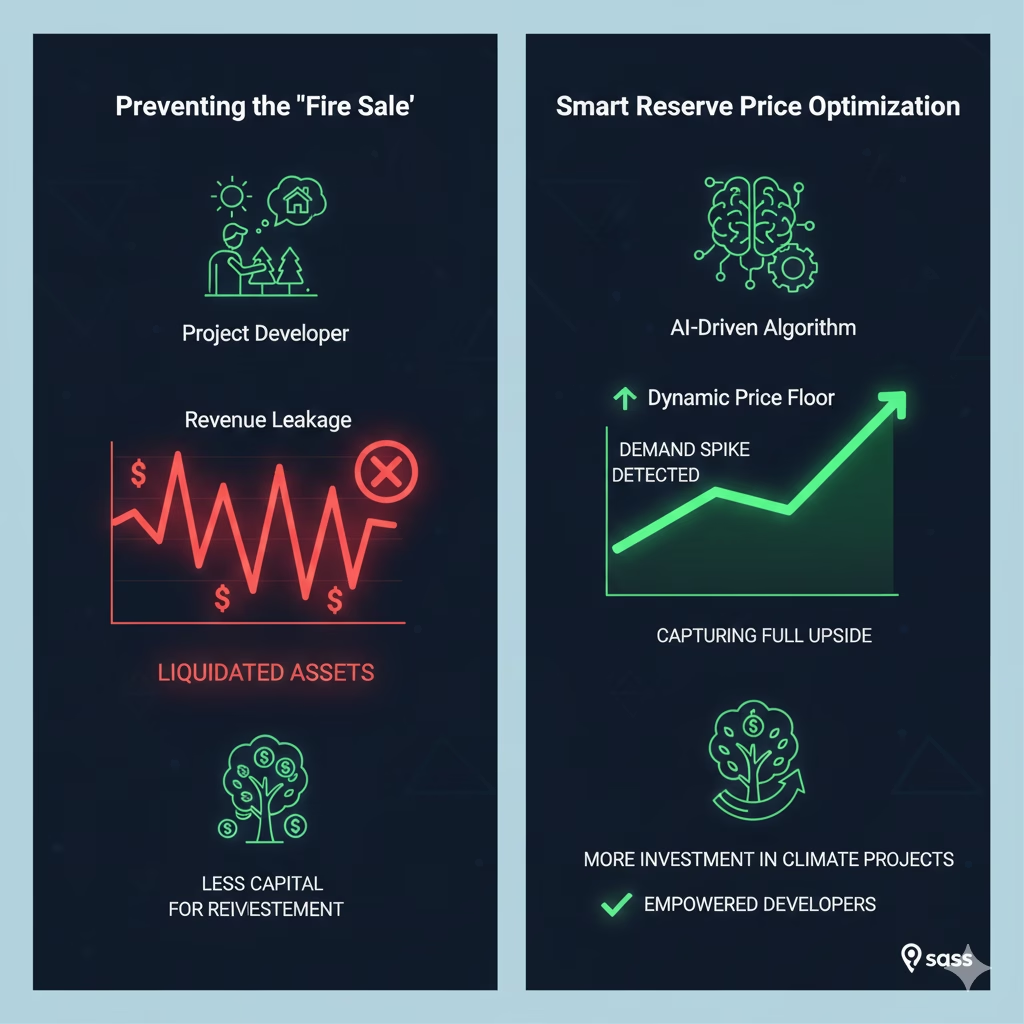
The Perspective: Reserve Price Optimization (RPO) Our SaaS platform introduces a safeguard: Reserve Price Optimization. By using historical data and real-time demand forecasting, the platform helps developers set intelligent, dynamic price floors. Instead of a static “minimum,” RPO adjusts based on the “velocity” of incoming bids.
If demand spikes during an auction-perhaps due to a new corporate net-zero announcement or a policy shift-the platform ensures the developer captures that upside. This prevents “money being left on the table.” By maximizing the Capital Efficiency of every credit sold, we ensure that a higher percentage of investment flows directly back into the field. In this model, the developer isn’t just a price-taker; they are an empowered participant in a fair-value ecosystem.
The next era of carbon trading won’t be won by those who simply hoard the most credits, but by those with the best Bidding Infrastructure. By prioritizing transparent price discovery and smart auction mechanics, we move beyond speculation. Fair value is the bridge to a trillion-dollar carbon market.