- 09 December, 2025
- No Comments
Imagine spending 1,800 hours every year just proving your company is sustainable. That’s nearly the time it takes to launch a new product line – wasted on paperwork. For mid-sized enterprises, ESG compliance costs can exceed $500,000 annually, draining resources that could fuel innovation, growth, or new product development.
The challenge? Tracking carbon emissions, validating sustainability claims, and providing auditable proof to regulators is complex, fragmented, and error-prone. Manual processes buckle under the weight of ESG demands. Blockchain offers a way out – automating compliance, cutting costs by up to 40%, and restoring trust with transparent, tamper-proof records.
This isn’t just about ticking boxes. It’s about transforming ESG from a burden into a competitive advantage.
The ESG Compliance Challenge
Organizations today face three major pain points:
- Fragmented data: Supply chains, energy meters, waste systems – all in incompatible formats.
- Regulatory overload: SEC climate disclosure rules, EU CSRD, GRI, SASB – each with different formats and verification levels.
- Verification gaps: Auditors provide snapshots, not continuous assurance. Stakeholders demand real-time proof to combat greenwashing.
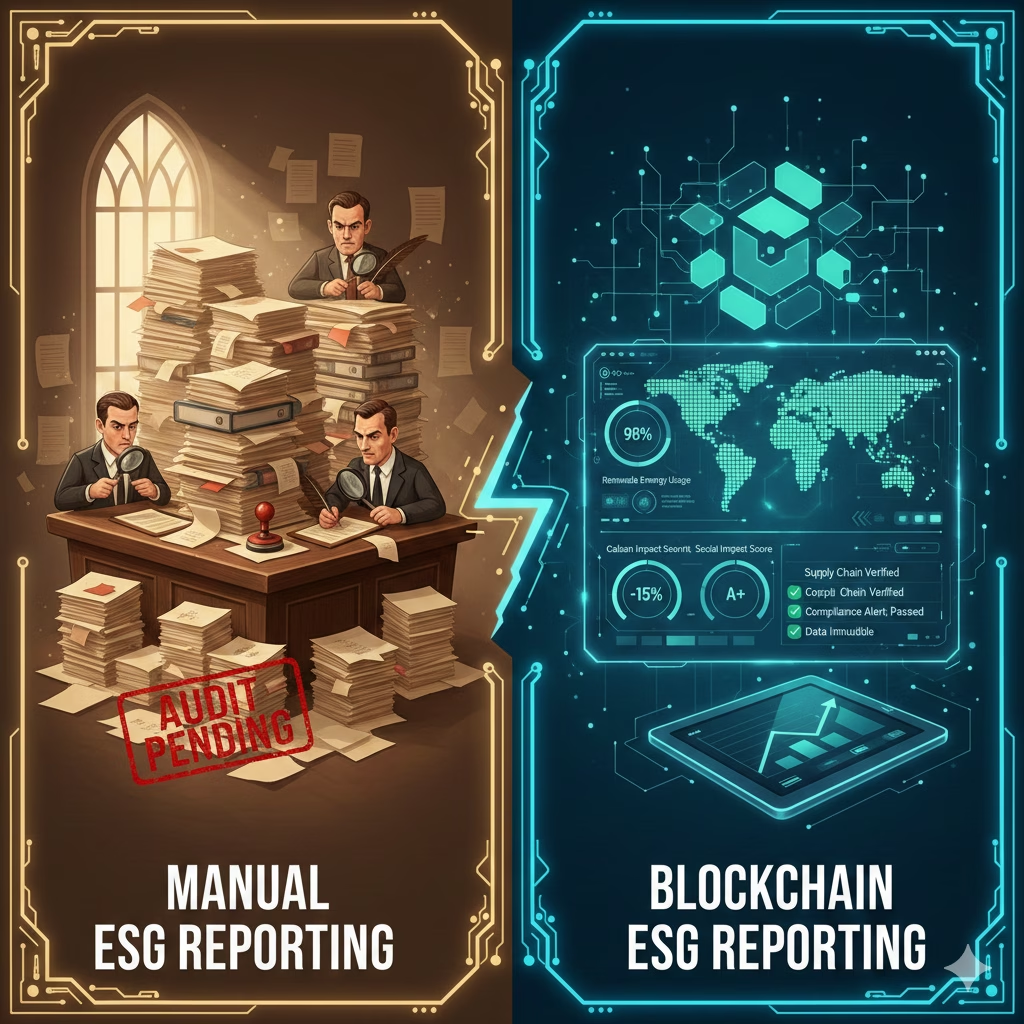
Manual reporting simply cannot scale. The more complex ESG regulations become, the more companies struggle to keep up. This is where blockchain-enabled automation steps in.
How Blockchain Automates ESG Compliance
Blockchain reimagines ESG reporting by creating a distributed ledger that records, verifies, and reports sustainability data automatically.
- Real-time data capture: IoT sensors feed emissions, energy use, and waste data directly to the blockchain.
- Smart contracts: Trigger alerts, offset purchases, or operational adjustments when thresholds are breached.
- Continuous verification: Every data point carries cryptographic proof of source and timestamp.
- Immutable audit trails: Regulators access tamper-evident records instantly.
- Automated reporting: Smart contracts generate compliance reports in required formats – no manual intervention.
This shift means ESG compliance is no longer retrospective. It becomes proactive, continuous, and automated.
Real-World Applications
Blockchain isn’t a theory – it’s already transforming ESG compliance.
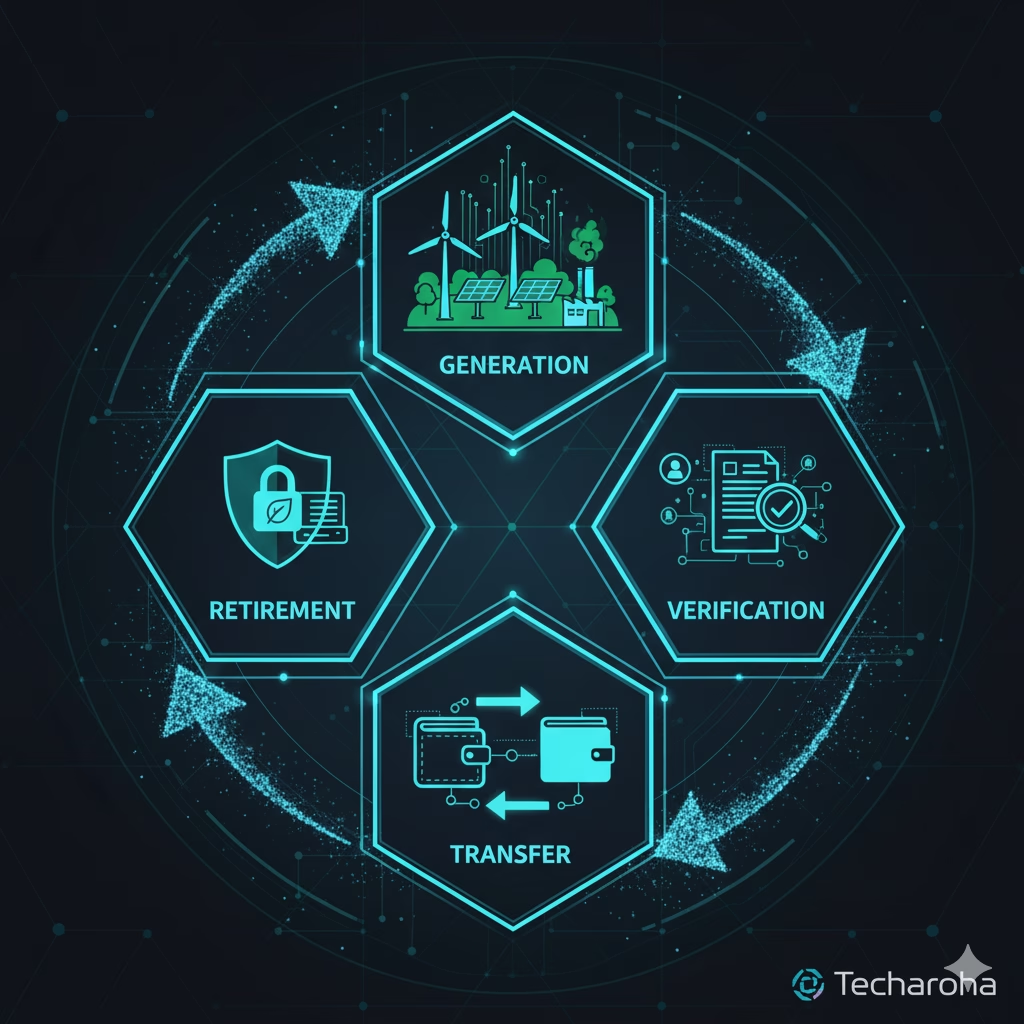
- Carbon credit trading: A wind farm generates 1 MWh of clean energy → blockchain instantly mints a verified carbon credit → smart contracts match it with buyers.
- Supply chain transparency: Suppliers record carbon footprints directly on-chain, enabling automatic Scope 3 emissions tracking.
- Voluntary carbon markets: Reforestation projects use satellite imagery + IoT sensors → blockchain issues credits in real time.
- Green bonds: Smart contracts release funds only when project milestones are achieved, ensuring capital flows to verified ESG initiatives.
These examples show how blockchain moves ESG compliance from paperwork to performance.
Benefits and ROI
Companies adopting blockchain ESG automation report:
- Cost savings: 35–45% reduction in compliance costs.
- Efficiency: ESG reporting teams shrink from 12 FTEs to 3.
- Accuracy: Error rates drop from 15–20% to below 2%.
- Trust: Blockchain-backed claims improve investor confidence and brand reputation.
- Agility: Compliance cycles shrink from months to days.
Blockchain doesn’t just tick boxes – it turns sustainability into a competitive edge.
This isn’t just operational efficiency. It’s about building trust, credibility, and market leadership.
Why Stakeholders Care
Investors, regulators, and customers are increasingly skeptical of self-reported ESG data. Greenwashing scandals have eroded confidence. Blockchain changes the narrative:
- Investors gain transparent proof of ESG performance.
- Regulators access tamper-proof audit trails instantly.
- Customers trust sustainability claims backed by verifiable data.
When ESG becomes measurable and verifiable in real time, it shifts from a compliance burden to a brand differentiator.
Implementation Roadmap
Getting started with blockchain ESG automation doesn’t have to be overwhelming. Companies can follow a phased approach:
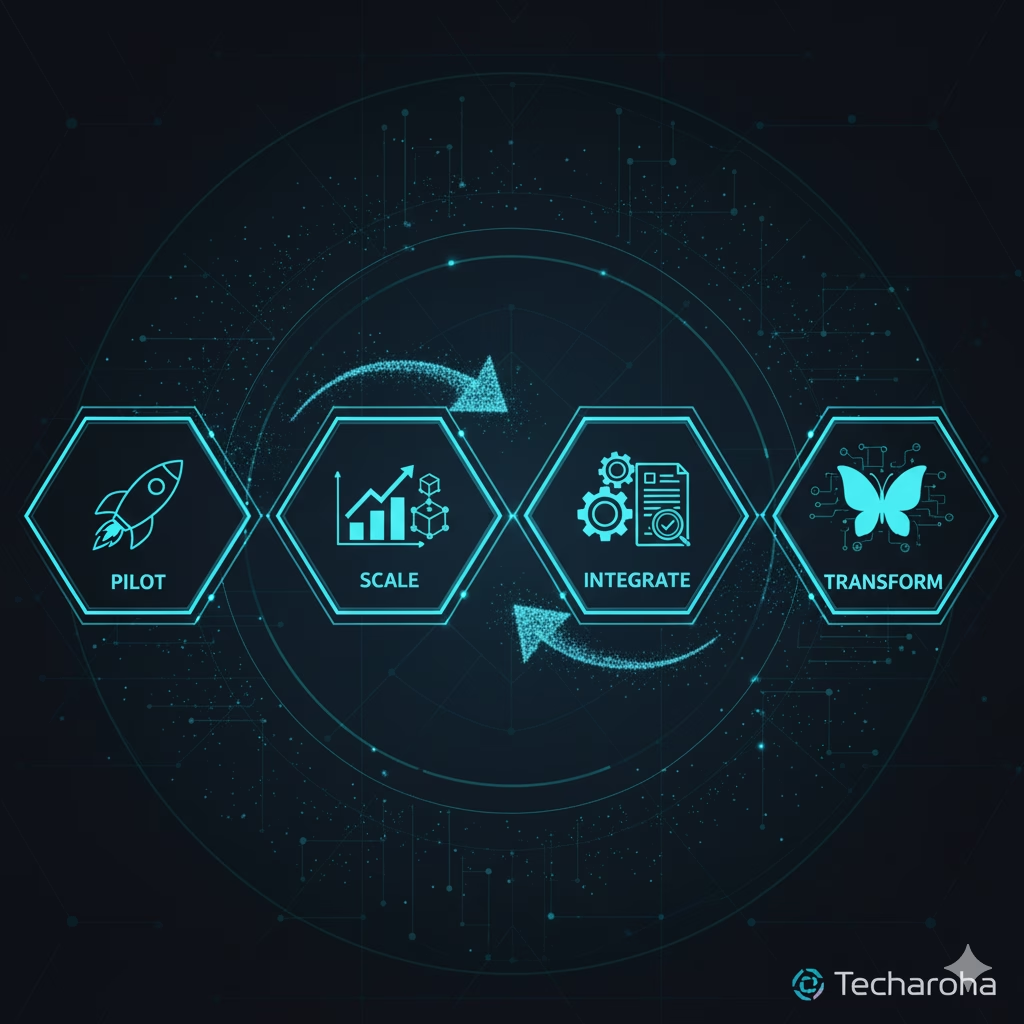
- Identify high-value use cases – carbon credit tracking, renewable energy certificates, or supply chain emissions.
- Pilot projects – small-scale deployments to test feasibility and ROI.
- Platform selection – evaluate transaction costs, scalability, interoperability, and regulatory compliance features.
- Integration – ensure smooth collaboration between sustainability, IT, and business units.
- Scale enterprise-wide – expand successful pilots into full ESG automation systems.
The Future of ESG Automation
As ESG regulations evolve rapidly, blockchain offers agility. Instead of redesigning reporting processes, companies can simply update smart contract rules. This means:
- Faster adaptation to new disclosure requirements.
- Continuous assurance instead of periodic audits.
- Real-time visibility into sustainability performance.
Blockchain doesn’t just automate compliance. It embeds sustainability into the DNA of business operations.
Case-Style Narratives
To make this transformation tangible, let’s look at mini-stories:
- Energy company in Europe: Deploys blockchain to track renewable energy generation. Every megawatt-hour of clean energy automatically mints a verified carbon credit, matched instantly with corporate buyers.
- Global manufacturer: Uses blockchain to capture Scope 3 emissions from suppliers. Instead of surveys, emissions data flows automatically into ESG dashboards.
- Financial institution: Launches a blockchain-based green bond platform. Funds are released only when project milestones are verified on-chain, ensuring capital drives real impact.
These stories show blockchain in action – not as a buzzword, but as a practical compliance engine.
Transform ESG Compliance with Blockchain
Blockchain has matured beyond cryptocurrency – it’s now a practical solution for ESG automation. Organizations that embrace it gain reduced costs, improved data quality, and enhanced stakeholder trust. Ready to cut your ESG reporting costs by 40% and eliminate greenwashing fears?
👉 See blockchain automation in action – schedule a demo today.